by MHolland | Nov 22, 2019 | Business Tips
I often get told that we accountants must dream in “black and white” because most reports are, well, “black and white”.
For me, I love color, and it is amazing how even the two colors “green” and “red” can really make a set of reports come alive and make more sense.
In fact, the program Color Accounting, a breakthrough in learning accounting uses colors (green, yellow, purple) as a tool to teach people how to deeply understand the dynamics of accounting. It is an amazing program taught in one day and is really a breakthrough in learning. Without color it would be boring and would, frankly, just not work.
Cash-Flow in Color
Take a look at this cash-flow statement in black and white, and tell me whether it is easy to understand:
Boring, right?
Now look at this one, the one we present monthly to our clients:
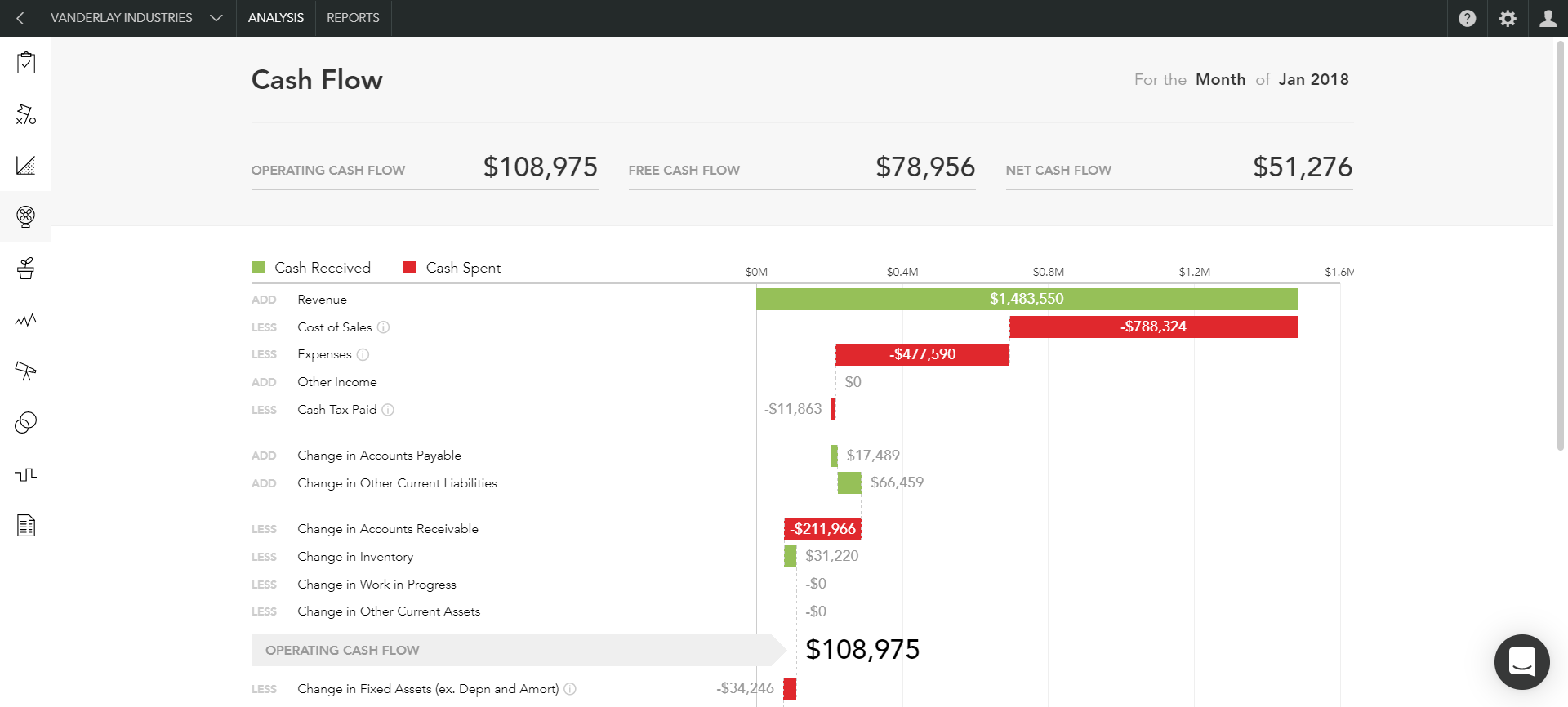
This shows money coming in and going out as if it is flowing down a waterfall, with money coming in colored in green and money going out colored in red.
All of our clients now understand their cash-flow, as it has come alive, visually.
Key Performance Indicators
Most businesses must track a few Key Performance Indicators, and again, showing in black and white can be quite bland, non-attention grabbing and not emphasizing critical decisions that need to be made by using “red” and “green” to highlight key numbers.
Let me show you an example of how presentation can drive you to know your business better, ask better questions, and then, as a result, make informed, trackable business decisions
Take a look at these two common reports – an Income Statement and a Balance Sheet:
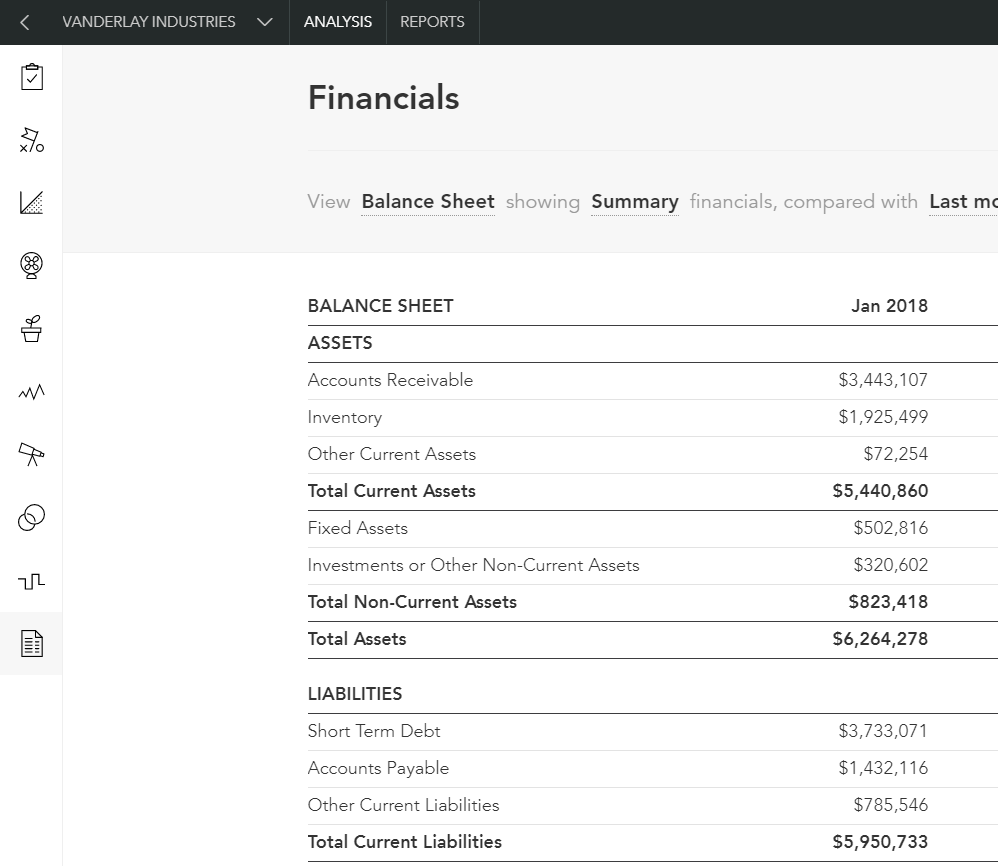
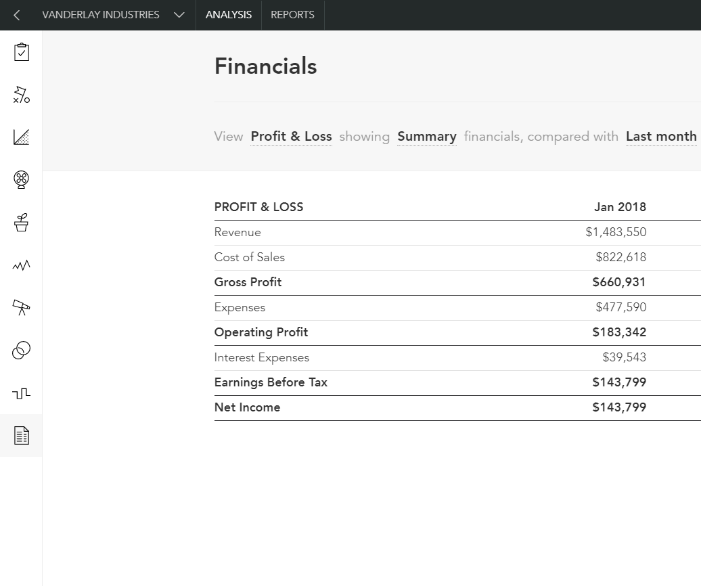
All of the information contained therein is rather meaningless without two things:
- Something to compare it to
- Ratios and indicators derived from the above numbers
Finally, by adding color, they sparkle and pop, coming alive!
First, let’s see the impact of adding comparative numbers to the two standard reports above:
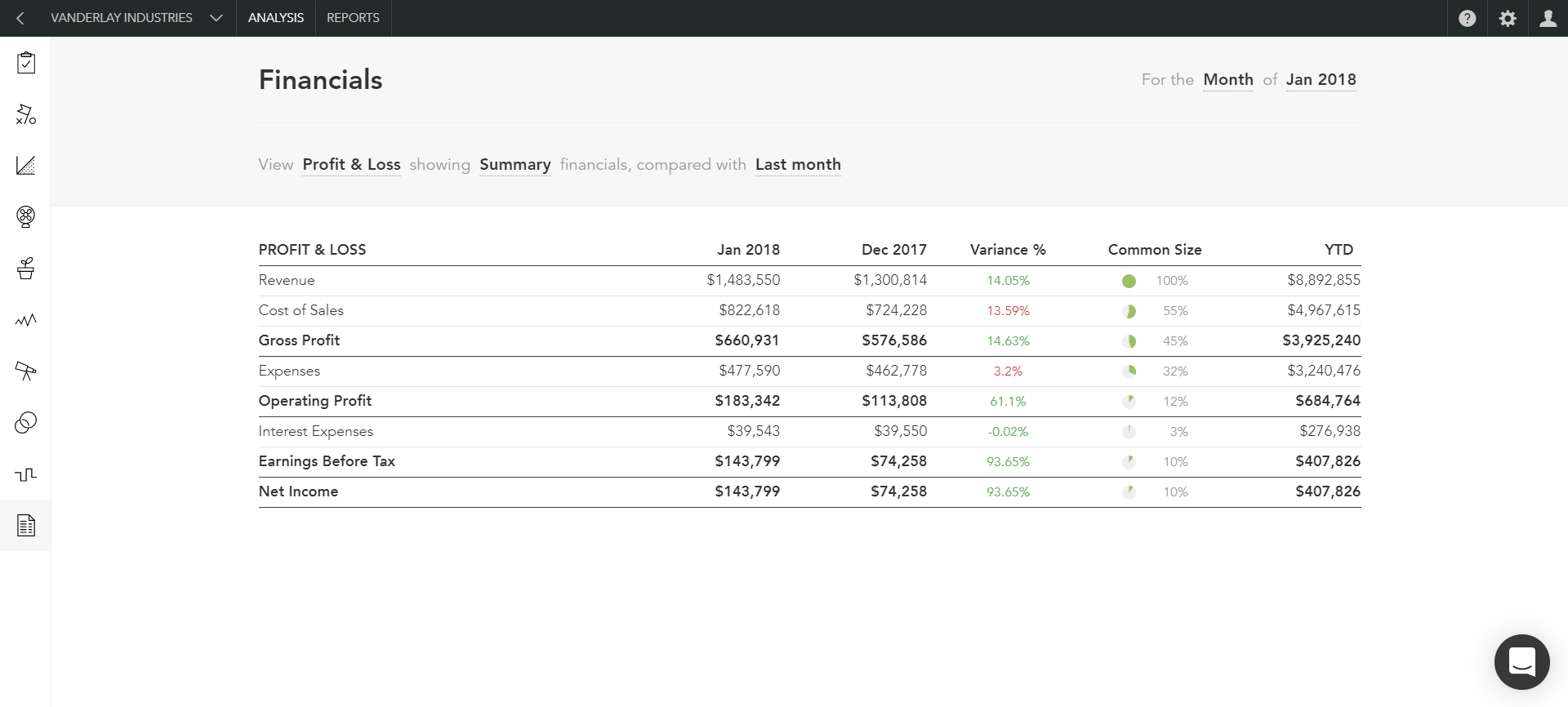
The above Income Statement now has a comparative column showing the month before and a variance column showing the changes. When it is a positive variance it is green, when negative, red. There is also a column showing the year-to-date figures.
We could compare the numbers to a Target or Budget.
You see, without a comparison, the first column has no meaning (or very limited meaning).
Now, take a look at this Chart:
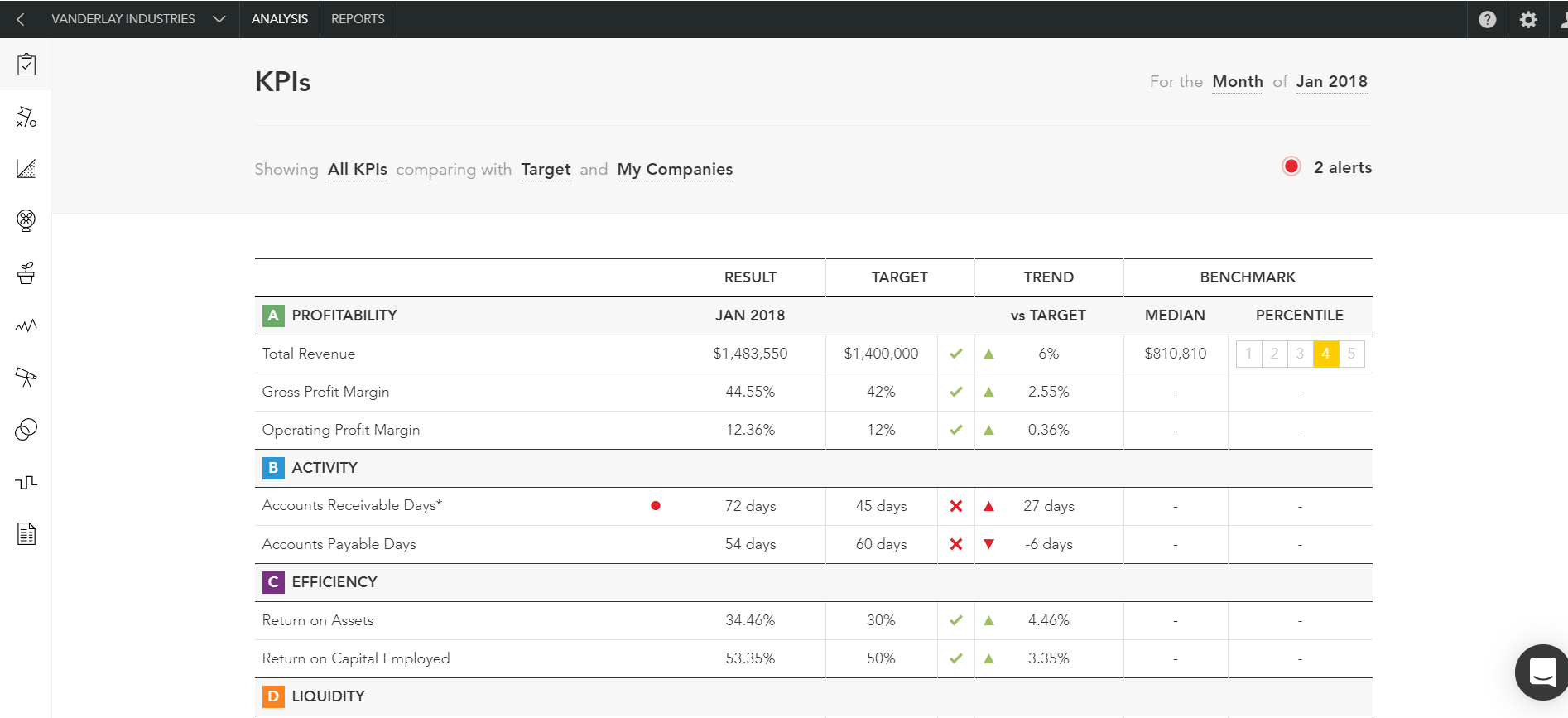
All of the numbers above are derived from the two reports above. However, what a simple dashboard like this gives you is the following:
- A goal to aim for – the Target and whether you hit it, or not
- When you hit it, you get a green checkmark
- When you don’t, you get a red cross
- These numbers can be compared to Benchmarks as well
This simple dashboard can give you, the business owner a condensed, summarized view of your business.
Here is an example of how that report can drive business decisions. Firstly, let’s look at the first red X – Accounts Receivable Days.
The target is 45 days. The actual is 72 days. What does this mean, you may ask? It means that on average it is taking you 72 days to collect your accounts receivable. This is a long time to wait to be paid, and it is definitely longer than your pre-set Target.
This observation can lead to more questions:
- Have we softened our credit terms, allowing people to take longer to pay us?
- Have we taken on poor paying customers, just to get a sale, and now they cannot pay us?
- Do we even have a credit policy, and should we change it?
Now, you can really dig in and get some answers which will lead you, as business owner, to take action in the critically important area of your business – cash-flow!
Trends
Looking at what is happening as a Trend, again in color, and in an attractive visual way can really help spot things you might not see looking a black and white row of numbers.
Option 1 is to present your numbers in a simple table, like this:
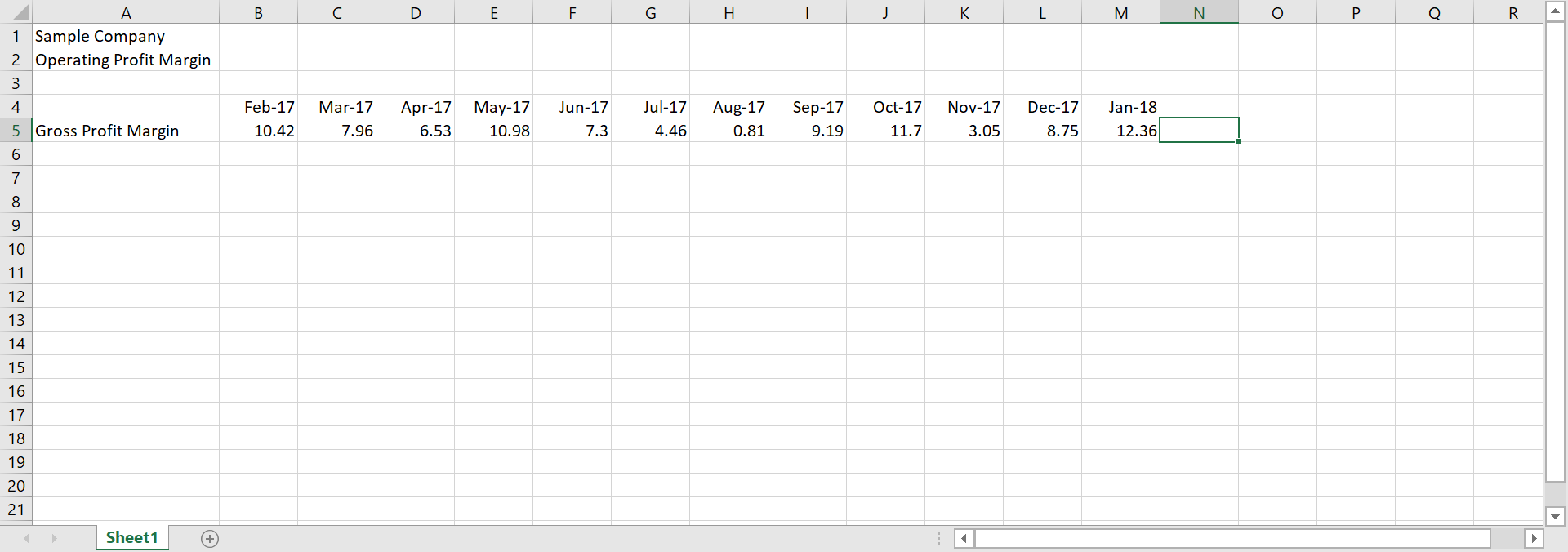
Although the image below is a bit smallish to scale for this Blog, look at the difference, with the exact same numbers as presented below.
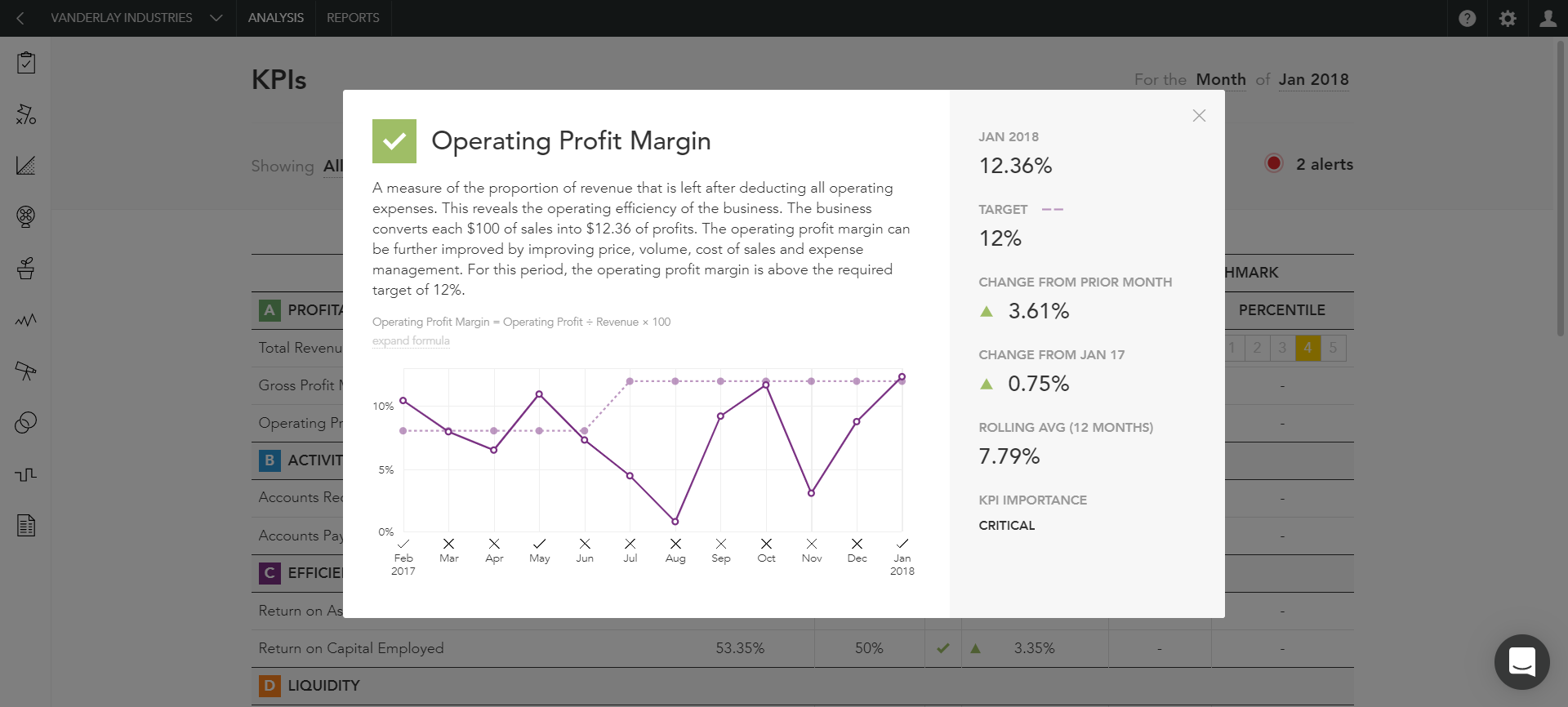
What pops out first is that big drop in August, which just doesn’t stand out in the first Chart above. This can lead to more questions and further investigation.
As you will note, on the side bar, in addition are included the operating margin for the current month, compared to the Target, the positive change from the month before, and from the same month in the prior year, and, finally, the rolling 12-month average.
Conclusion
How your numbers are presented to you has the following critically important benefits:
- Your understanding of your business deepens
- The numbers will often lead to asking better and more relevant questions
- The decisions you make will have more meaning when tracked by the numbers.
Here is an example. We recently implemented a powerful software that helps improve the speed of collections on our clients accounts receivable. Because we track Accounts Receivable Days for all our clients, we can spot numbers off-Target and provide solutions.
We could see quite quickly that this powerful software had an impact on the Accounts Receivable Days. It went down, which is favorable.
Finally, even more important than nice visuals are having reports that are impeccable, with reliable, solid numbers. That is what we provide, and without that, nothing else will work.
Thanks for reading…
by MHolland | Nov 15, 2019 | Business Tips
Common sense would dictate that fear as a motivator in business is a really bad idea.
Yet, we all know, a gazillion bosses never got that memo!
How did that all come about?
By people taking seriously a really evil guy’s advice from about 500 years ago – Niccolo Machiavelli, who wrote a book called The Prince where all his “principles” were laid out for others to follow.
It is possible to be loving and firm, and the balance is something we each have to work out for ourselves.
I just read a great Blog on this topic (it is very short, so I would encourage you to read it). It is from a “twenty-something” man, who is letting the world know that love is a much better motivator than fear, especially for younger people. I would add that it is better motivator for ALL people, of any age.
We have certainly experienced that on our Team. Everyone refers to us as a family. I love each and every one of my Team. I work hard for my Team, and they, in turn, work hard for our great clients.
Productivity is high. So is happiness and work fulfillment.
Here is the Blog for you to check out:
Blog on Love Versus Fear
Thanks for reading…
by MHolland | Nov 7, 2019 | Business Tips
What is a Single Point of Failure?
It is when your business can tumble drastically, or even collapse if one major dependency fails.
Look carefully at your business. Can it operate without that one person, machine, system, or even one huge client?
In various ways almost all businesses have some weak point of failure, and it is critical to know what those are.
Are You Dependent on One Person?
You may not even know it, yet your business could fail without a particular person. It could be you as business owner, or it could even be someone you could not even guess would be a Single Point of Failure.
A very public example of a single point of failure in a public company is, in my opinion, Steve Jobs of Apple. A lot of people experienced a drop in quality and innovation after Steve Jobs sadly passed away at age 58. His charismatic personality, focus on innovation and demanding personality was so embedded in Apple’s way of doing business, yet, it was not fully embedded in the Apple Culture, and as a result not easily replaced.
At one point in our own business, when we operated as a traditional public accounting firm, I was the single point of failure.
We had purchased a firm in a small town in the Cariboo Region of BC from a Chartered Accountant who was retiring.
We leased a lovely new office space, furnished it in a style fitting a large city, upgraded the systems, including adding cutting edge computers and software.
My office was at the front, right behind the reception. Clients would walk in, by-pass the reception, sit down (often without an appointment) and ask me questions.
Sometimes I just couldn’t get any work done at all!
Also, my name was on the door and on all the signs, so clients felt if they didn’t get me, they didn’t get the best.
So, I switched my office to a smaller one at the back, down the hall, and put a key person, my right-hand woman, an accounting technician in my former office.
What happened? Clients walked in as before and entered Bonnie’s office instead of mine, and this caused her to develop and grow, and surprisingly most of the questions could be answered by her, as they were not complex tax questions for the most part.
Hidden Single Failure Points
Sometimes it is not so obvious who the Single Point of Failure is.
We once saw a large client experience a massive loss of productivity in their accounting department when an administrative person, who was secretly, (thinking that she was helping), by-passing the organizational systems in place and doing work for many, many department heads.
This person got sick and was off work indefinitely and it was then that everyone quickly saw what she had been doing.
She thought she was helping, yet this ended up being a massive impact from a Single Point of Failure.
The entire systems needed revising with extensive training as well.
The solution was to spread the work out over many people by-passing this dependency on one person.
Single Point of Failure – Machinery
A machine can be a Single Point of Failure as well.
Ask yourself, what machine are we so dependent on that if it fails, we have a total collapse in our ability to perform as a company?
It could be a productive machine that is old. Or perhaps it is almost obsolete or maybe it was purchased overseas and not easily maintained nor easily replaced.
For our firm, once we transformed our traditional accounting firm into a virtual, outsourced, online accounting firm it was our servers.
If they failed, we were hooped!
So, we had more than one server, and they were installed in an air-conditioned vault with a tumbler lock.
Even then, though, we had points of failure. The air conditioning could have failed on the weekends when we were not there to monitor, the servers could have over-heated and failed.
Once cloud-based computing took off we quickly switched to being fully in the cloud and recently finally shut the servers down.
The redundancies built into the cloud is such that very little could happen to us that would stop us from continued operations. (Larger cloud-based accounting software programs use Amazon or Microsoft servers with backups at separate physical locations).
Single Point of Failure – A Supplier
You may have a supplier that is a Single Point of Failure.
We have seen a client in the food industry having to source ingredients from remote locations around the globe.
The way to counteract this kind of failure point is to look for redundant suppliers and, as well, purchase in larger quantities.
Single Point of Failure – A Customer
The rule of thumb in accounting is that a client or customer that provides more than 20% of your sales revenue can create an economic dependency. This can be a Single Point of Failure if that customer were to go out of business or stop doing business with you.
I recommend you go over your client/customer list and do a quick calculation to see if you have any client making up 20% or more of your sales.
Another twist on this Single Point of Failure is to look at a particular industry you may be dependent on that if that industry fails or declines it could severely impact your business.
An example could be if all your clients are in the real estate industry and the market is in a steep decline for a few years and that impacts your business.
What is the Solution?
One solution – especially when it comes to people as a Single Point of Failure – is to create systems that are documented with enough detail for people to follow easily.
Then use those systems to really train more than just that one person for each major function in your business.
You must document those systems. Just assuming you have systems without writing them down will not work.
Too many people have what they call systems “in their head”, that is just another way of saying, you have a Single Point of Failure! The person with the systems in their head gets hit by a bus, and there go your systems.
A system is not a system without documentation and training.
It is also not enough to just document either – you must train everyone in the system, and then when you have a failure, blame the system, not the person!
How to Test?
To discover how many (not if, by the way) Single Points of Failure you have in your business, do an “audit” and ask these questions:
- Do we have a completed organizational chart? Is there a person in each role?
- Do we have a job description, performance standards and systems in place for each key role/function?
- What will happen if that person is not in that slot tomorrow? Do you have a backup plan?
- Do you have people cross trained in your business?
- What happens if you, as the business owner/key executive cannot work?
- What equipment are you dependent on? What will you do if that equipment fails? Is it insured? Is it easily replaceable?
There Will Always be Some Dependencies
There will always some dependencies in your business. Highly skilled people are not easy to replace. One antidote is to create such a compelling, attractive culture that you can replace key people in a crisis because people will want to work in your business.
You cannot plan for every single thing going wrong, just make sure the most vulnerable points of potential failure are covered.
Thanks for reading…
